
WHERE LEGEND, LAND, AND VINEYARDS CONVERGE
In these lands, time is more than a measure of what has passed; it is a presence that accumulates in layers, revealing itself through every trace it leaves behind.
Hidden within the stones, the vineyards, and the direction of the wind, these traces endure in a quiet continuity that connects past and present. Encountered at every step, they carry not only what can be seen, but also what can be felt, remembered, and rediscovered with new meaning. To follow these traces is to encounter once again the layers left behind by time and to experience the depth of this landscape firsthand.
THE HISTORY OF VITICULTURE IN TROY AND THE NORTH AEGEAN
The North Aegean is a landscape shaped by viticulture over thousands of years. Here, the grape is more than an agricultural product; it is part of a body of knowledge and a way of life passed down through generations.
Bozcaada, known in antiquity as Tenedos, was one of the most renowned centres of wine production in the ancient world. In a land where grape clusters appeared on coins and viticulture was closely associated with the cult of Dionysus, production was not merely a means of livelihood, but a culture deeply woven into everyday life.
Today, ceramics, vessels, and objects of daily use displayed at the Troy Museum offer tangible evidence of this enduring tradition. These artefacts, spanning different historical periods, remind us that viticulture and production have continued uninterrupted on these lands for centuries.
The layered structure of Troy stands as one of the strongest expressions of this continuity. While each layer bears witness to a different era, the culture of viticulture has remained an enduring presence throughout these transformations.
The production that continues in this region today is not a repetition of the past, but a contemporary expression of the same living memory.
To truly understand these traces is to follow this route and experience each of its stops firsthand.
THE CULTURAL HERITAGE OF THE REGION
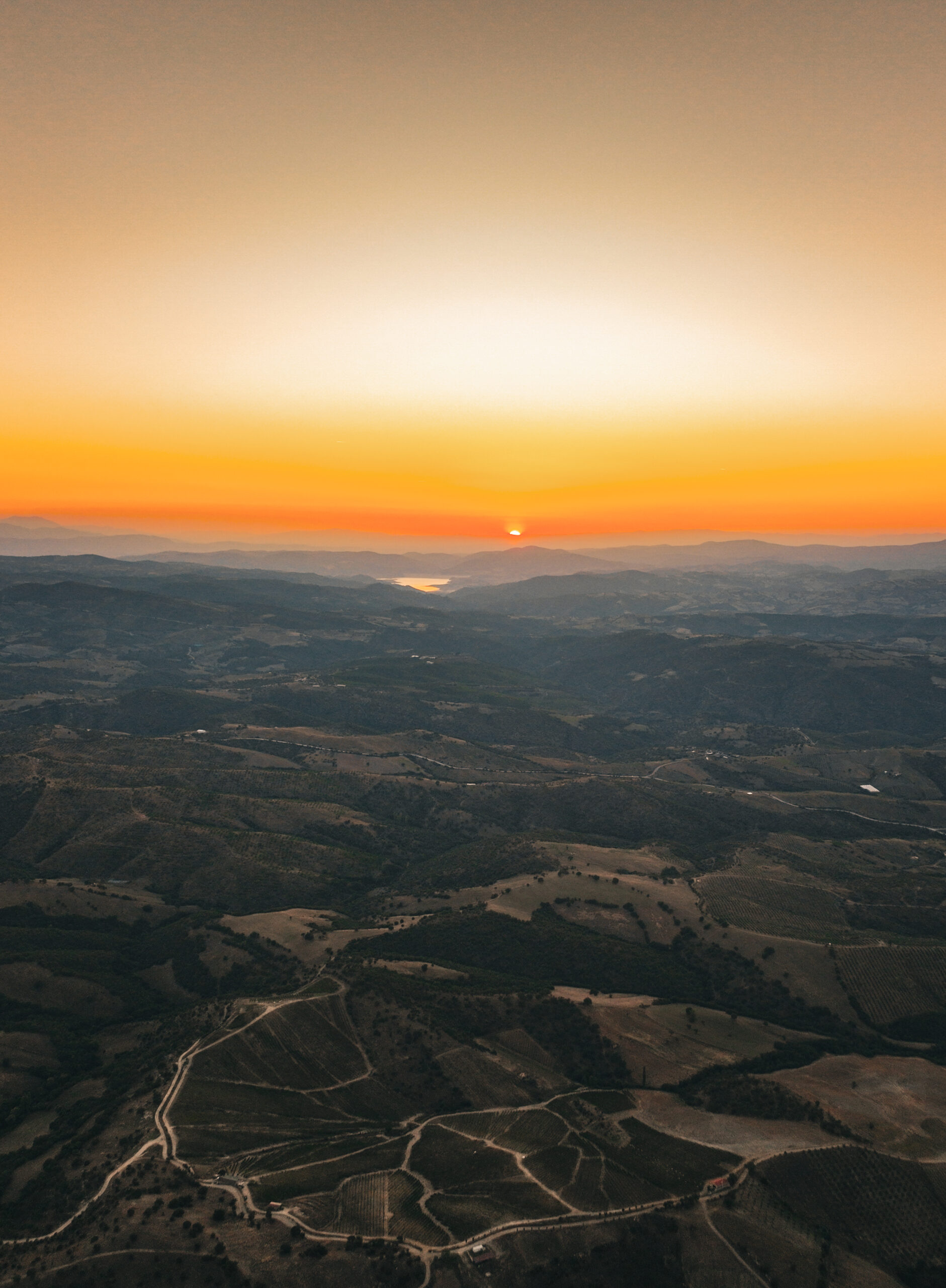
Throughout history, the Troas region has served as a crossroads between Anatolia and the Aegean world. From the earliest settlements to the Hittite civilisation, and later through the Greek and Roman periods, these lands have carried the traces of diverse cultures across an unbroken continuum that extends to the present day.
Troy stands as the most powerful expression of this layered heritage. Through its archaeological strata, it preserves not only the story of a single city, but also the shared memory of successive civilizations that shaped and transformed one another over time. In this sense, Troy belongs not to a single culture, but to the collective heritage of humanity.
Ancient settlements such as Abydos, Sestos, and Madytos, scattered throughout the region, bear witness not only to mythological narratives, but also to everyday life, trade, and the movement of people across these lands. Every trace encountered here forms part of a cultural legacy that has accumulated, evolved, and endured through the centuries. It is this depth that transforms the Troia Wine Route into more than a route, offering a unique opportunity to experience and interpret the many layers of this remarkable landscape firsthand.
MYTHOLOGY AND THE CULTURE OF THE VINE
“Tenedos, swept by the winds across the plain of Troy…”
— Homer
In Homer’s epics, Troy is not merely the setting of a war. It exists within a world where daily life, rituals, and human relationships are deeply intertwined.
In Homer’s epics, Troy is not merely the setting of a war. It exists within a world where daily life, rituals, and human relationships are deeply intertwined.
Bozcaada, known in ancient sources as Tenedos, appears in these narratives as more than an island. It emerges as a place shaped by the wind, where journeys converge and waiting stretches across time. Sailors would stop here, regain their bearings, and set sail once again. Over time, the island became more than a waypoint; it became part of the memory of these stories.
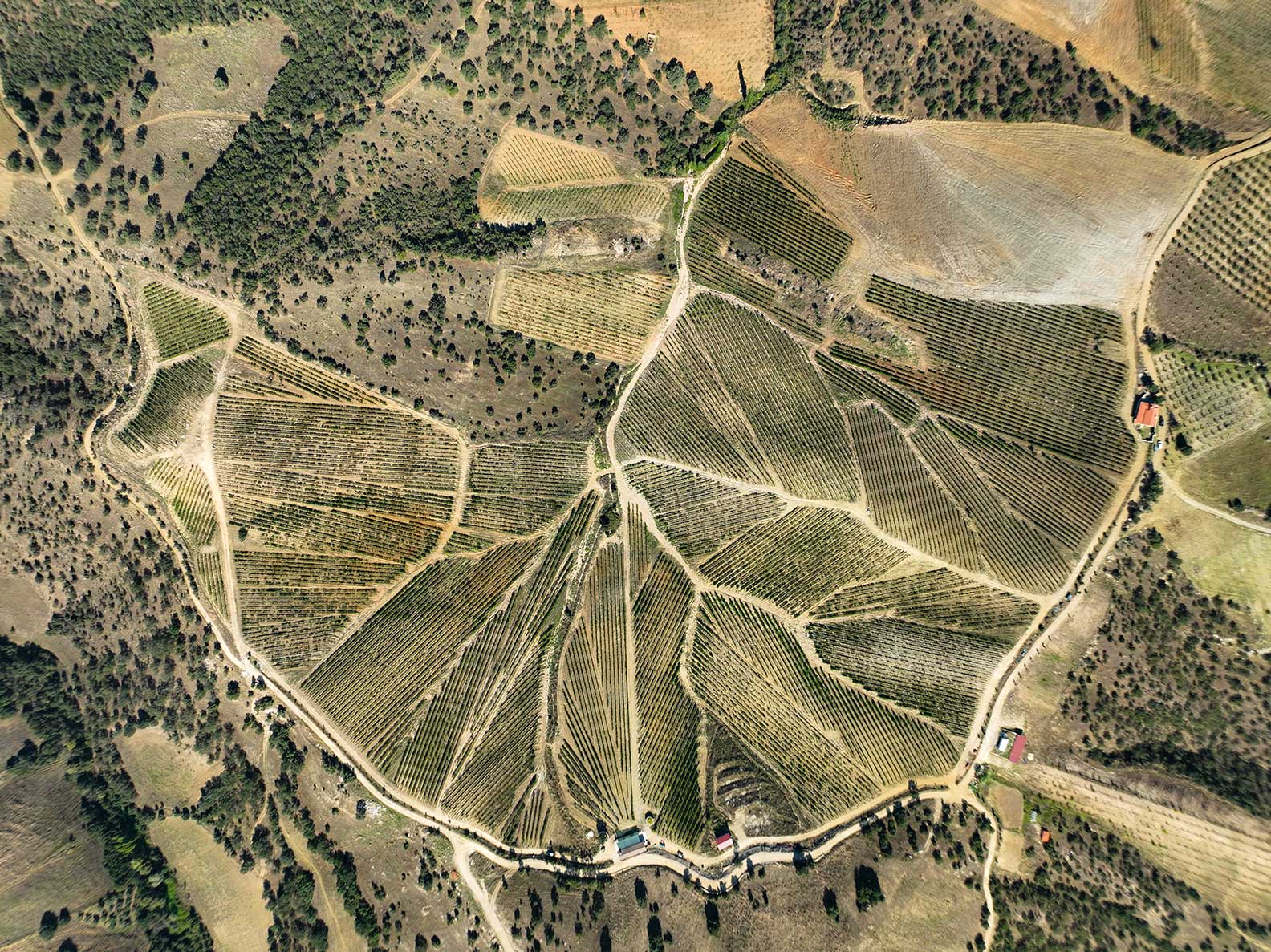
Along this route, vineyards do not simply spread across the land. Grapes cross the sea, carried in amphorae to distant shores. The viticultural tradition established on these lands became part of a network extending from the Aegean to Central Europe. This movement, sustained over centuries, quietly reflects the deep and enduring role of viticulture within this region.
Here, grapes are not merely cultivated. They become part of the rhythm of life, existing alongside belief, time, and human experience. Shaped under the influence of Dionysus, this culture was lived as an extension of the relationship between people and nature.
The vine does more than grow here; it takes root. Each root carries knowledge, customs, and memory.
Along the route stretching from Troy to Tenedos, the culture of vineyards and wine continues to flow through legends, rituals, and everyday life. And those roots endure to this day, living on in the same soil and beneath the same wind.